
Poppy Watch
On raising kids who notice.

We’ve been on poppy watch. It started about a month ago, when the first green, fuzzy stems emerged from the still semi-frozen ground. Then, just as April was turning to May, the first fuzzy flower bud appeared. We counted all the ones we could find one morning on the way to the school bus stop. A few days later, the first bits of red and orange started to peek through, and then the wait was really on, made all the more anticipatory (at least for me) by the fact that the first ones normally pop within a day or so of my birthday.
Wild, the poppies came with the house. They appear in roughly the same spot in the yard each year, but where exactly and how many is always a mystery until the first stems appear.
I suppose if I were really dedicated to native gardening, I would have removed them by now. While they are not invasive, the corn poppies in our yard don’t provide the same ecosystem benefits as native plants, having arrived in the U.S. likely as an accidental weed seed from Europe. Yet, I love them. Their seeds can survive for 100 years, so I can’t help but feel they are a connection to the past. To the people who stewarded our land before us. They also need soil disturbance to grow, which is why they so often show up in farm fields or, in our case, a front garden my child dug in as a toddler. It was a COVID spring when we first noticed them, and she delighted in finding them, pulling them up, and spreading the seeds around.
They force us to slow down and notice. We have to appreciate them where they are, as they don’t make for cut flowers, and if you miss the bloom, which only tends to last a few days, they’re gone until next year. The noticing that is required is a gift. A skill that I want my kid to carry with her in a world that will constantly try to rush her.
The conditions for noticing have never been worse. Kids today spend more time indoors than any previous generation. Their hours outside of school are increasingly scheduled, structured, optimized—music lessons, organized sports, art classes. Unstructured time, the kind where a kid might end up staring at a flower bud for 10 minutes or watching an ant walk across the sidewalk, has become a luxury. And that’s before we even get to the screens, designed by people specifically to capture our attention in a fast, fractured way that moves too quickly for us to really notice or think thoughtfully about anything.
Yet raising kids to notice is one step toward raising kids who care enough to act. As Meghan Fitzgerald, who has a whole Substack on raising kids to own their attention, recently wrote “attention is the ground on which everything is built. Love. Care. Experience. Any and all impact we make.”
Attention, especially attention to nature, is so so so beneficial for kids and adults. A 2016 randomized controlled trial tested what researchers called the “Noticing Nature Intervention,” which involved simply paying attention to everyday nature and noting the emotions that arose. Participants showed increases in positive affect, hope, and feelings of connectedness. Studies also show that children who feel connected to nature are often happier and more likely to share and develop strong friendships than children who are not, and that children and adults who spend time outdoors are more joyful, content, and less anxious.
The world our kids are inheriting will ask a lot of them. Too much, honestly. I think a lot about the things the planet needs us and them to do. Compost, for instance, or understand carbon footprints, but they aren’t going to care about those things unless they care about the world. The planet needs people who not only notice and understand when something is wrong but who feel it personally enough to do something about it.
Which is where it gets tricky, right? We need systemic change to address the climate crisis, and it is not our responsibility or that of our children to solve it. Nor is it even possible for us to fix it, and we have to accept that reality—and help our kids accept it too. But acceptance isn’t the same as helplessness. Kids who grow up noticing the world around them have something to hold onto. They know their particular patch of ground. They’ve watched things change and come back and change again. That rootedness is a form of resilience. And there’s agency that comes from paying attention, from knowing what’s actually there, from caring about something enough to act when it matters.
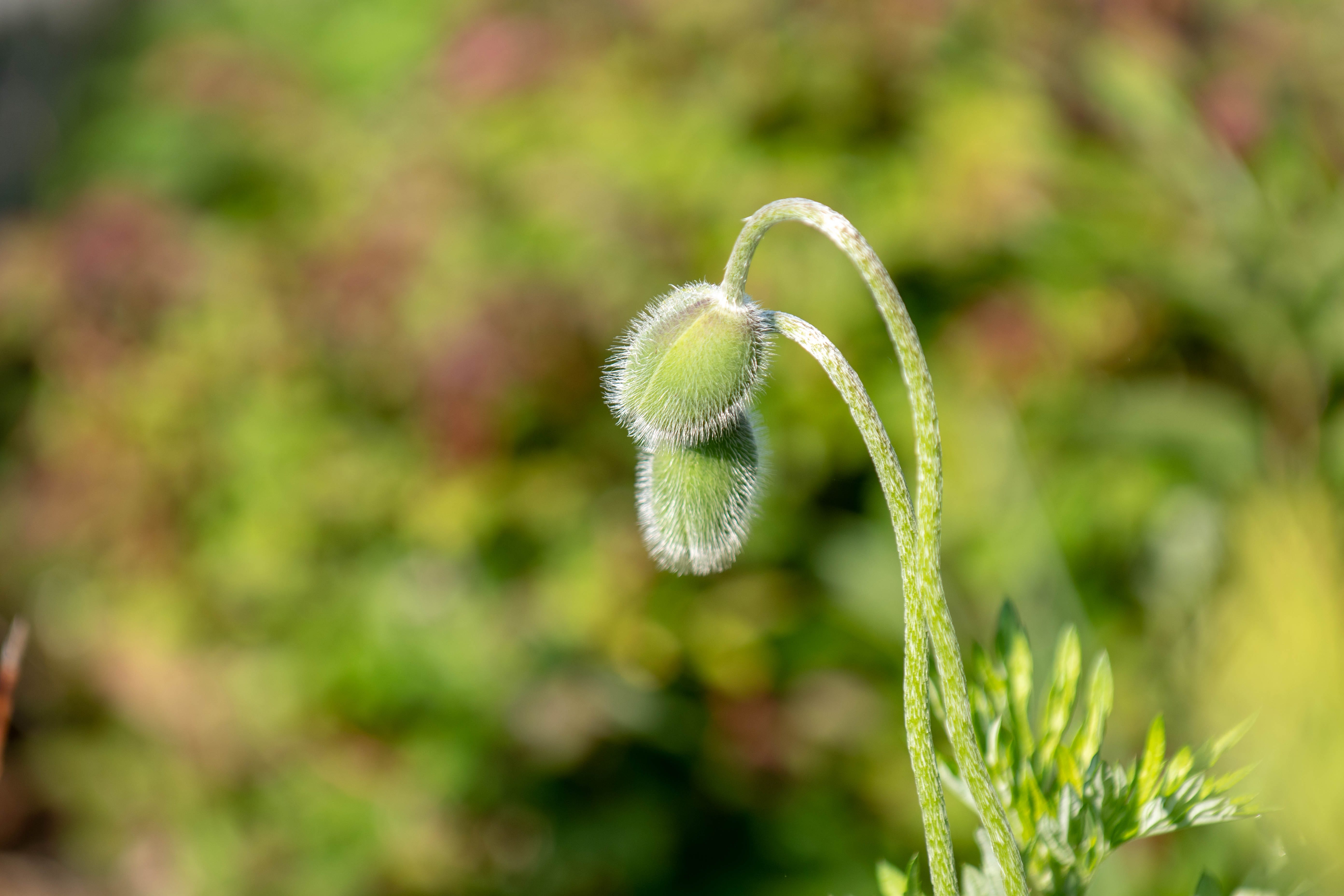
Cultivating a kid who notices takes intention, but it doesn’t have to be complicated. It can be as simple as spending time checking whether poppies have bloomed, or taking a pause outside to ask what your child hears or sees. I like hear, as we tend to be so visually focused these days (screens again), or noticing the red bird that visits the yard. But you have to slow down enough to do it.
Everything around us is designed to fracture our attention. The algorithms are not interested in whether the poppies have bloomed. But we are.
~ Bridget
P.S.: A few other things …
Published: New work in Martha Stewart Living on sourdough bread. Plus, for North Star Monthly, how to create a kid-friendly garden (and why you should) and all about mud.
Writing: Currently reporting a story for USA Today on what losing a pet teaches kids and how parents can help them through it, and another story for Martha Stewart Living on why floral flavors keep popping up in coffee beverages and cocktails.
Reading: A Frog in the Fjord - One Year in Norway by Lorelou Desjardins which I picked up at a book swap, Leave big tech behind! How to replace Amazon, Google, X, Meta, Apple – and more which might be a summer project, What Will It Take to Get A.I. Out of Schools? and Should schools get rid of homework? Some educators are saying yes both of which are things I’m thinking about as part of my board of education duties. I’m fascinated by this bit of good news: light pollution in France dropped sharply between 2014 and 2022 and also love seeing research I’ve written about show up on Substack.
Thank you for reading! Tapping the ❤️ button helps this newsletter find new readers.